Saying Adieu: “Mandela Dead and Alive”

“. . . And Africa you go on palavering

first hands offered then clenched fists

you the eternal survivor

speaking of onyx not of glass

for man must fathom all

plunge deep and rise along

his secret blood

row row relentlessly

row towards the sun . . . ”

(Edouard J. Maunick – translation)

Leave a comment

Filed under For Lovers, Readers and Me

What She’s Reading: “This is How You Lose Her”

“And that’s when I know it’s over. As soon as you start thinking about the beginning, it’s the end.”

I love Junot Diaz. His prose is energetic and his voice is one of the most unique I have encountered in years. “This Is How You Lose Her” is not cut from the same award-winning cloth as his earlier novels, but Diaz shines here. His writing is a masterful mix of street style and high brow technique; his tempo ranges from fast paced to methodically analytical. Many find his language offensive but I appreciate the boldness and authenticity of his prose. This is a quick and enjoyable read that examines love – perhaps a cliched topic – with fresh perspective.

Check it out and let us know what you think.

Leave a comment

Filed under What We're Reading

The Bibliophile: What Kind Of Reader Are You?

We just read the Atlantic Wire’s “What Kind of Reader Are You?” and, after laughing at our own expense, finally come to terms with who we are as readers.  What kind of readers are The Afro-Librarians?

She, as a child, was a “Cross-Under Reader”.  She was often told that her reading selections were “too adult” but rebelled (If sneaking books into the house can be considered rebellion) by reading them anyway.  As an adult, she is classified as a “Chronological Reader” who has yet to find a method to her madness.

He is a classic “Book Buster”.  His home is filled with books and he takes pleasure in both his traditional and non-traditional bookshelves.  His love of books is physically evident as most of the books he owns are heavily underlined, highlighted and dog-eared.  Suffice it to say that he loves his books to death.

Check out the article and identify yourself.  What kind of reader are you?

http://m.theatlanticwire.com/entertainment/2012/08/what-kind-book-reader-are-you-diagnostics-guide/56337/

2 Comments

Filed under Afro-Caribbean Lit, The Bibliophile

Happy Birthday Chinua Achebe

In honor of the late, great Chinua Achebe’s birthday today, we are paying homage to his legacy. You may be familiar with his most famous work, Things Fall Apart, as it may have been your first introduction to literature from the continent. Achebe, a Naija born and raised, also wrote a number of essays, poems, and critiques that are as relevant today as they were when originally published.

So without further ado, Here are a few of our favorite Achebe quotes:

“I tell my students, it’s not difficult to identify with somebody like yourself, somebody next door who looks like you. What’s more difficult is to identify with someone you don’t see, who’s very far away, who’s a different color, who eats a different kind of food. When you begin to do that then literature is really performing its wonders.”

“If you don’t like someone’s story, write your own.”

“We cannot trample upon the humanity of others without devaluing our own. The Igbo, always practical, put it concretely in their proverb Onye ji onye n’ani ji onwe ya: “He who will hold another down in the mud must stay in the mud to keep him down.” (The Education of the British-Protected Child)

“There is no story that is not true.” (Things Fall Apart)

“My weapon is literature.”

“People from different parts of the world can respond to the same story if it says something to them about their own history and their own experience.” (There Was A Country: A Personal History of Biafra)

“I would be quite satisfied if my novels (especially the ones I set in the past) did no more than teach my readers that their past – with all its imperfections – was not one long night of savagery from which the first Europeans acting on God’s behalf delivered them” (Morning Yet on Creation Day)

Tell us your favorite Achebe quote . . .

2 Comments

Filed under African Lit

Ghanaian Literature Week: “African Heaven”


“African Heaven” – Frank Kobina Parkes

Give me black souls,
Let them be black
Or chocolate brown
Or make them the
Color of dust —
Dustlike,
Browner than sand.
But if you can
Please keep them black,
Black.

Give me some drums;
Let them be three
Or maybe four
And make them black —
Dirty and black:
Of wood,
And dried sheepskin,
But if you will
Just make them peal,
Peal.
Peal loud,
Mutter.
Loud,
Louder yet;
Then soft,
Softer still
Let the drums peal.
Let the calabash
Entwined with beads
With blue Aggrey beads
Resound, wildly
Discordant,
Calmly
Melodious.
Let the calabash resound
In tune with the drums.

Mingle with these sounds
The clang
Of wood on tin:
Kententsekenken
Ken-tse ken ken ken
:
Do give me voices
Ordinary
Ghost voices
Voices of women
And the bass
Of men.
(And screaming babes?)

Let there be dancers,
Broad-shouldered Negroes
Stamping the ground
With naked feet
And half-covered
Women
Swaying, to and fro,
In perfect
Rhythm
To “Tom shikishiki”
And “ken,”
And voices of ghosts
Singing,
Singing!
Let there be
A setting sun above,
Green palms
Around,
A slaughtered fowl
And plenty of
Yams.

And dear Lord,
If the place be
Not too full,
Please
Admit spectators.
They may be
White or
Black.

Admit spectators
That they may
See:
The bleeding fowl,
And yams,
And palms
And dancing ghosts.

Odomankoma,
Do admit spectators
That they may
Hear:
Our native songs,
The clang of wood on tin
The tune of beads
And the pealing drums.

Twerampon, please, please
Admit
Spectators!
That they may
Bask
In the balmy rays
Of the
Evening Sun,
In our lovely
African heaven!

Leave a comment

Filed under African Lit

Ghanaian Literature Week: “Ghana Must Go”

“Happy families are all alike; every unhappy family is unhappy in its own way.” (Tolstoy)

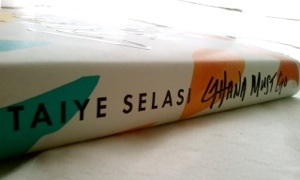
I just finished Taiye Selasi’s highly praised Ghana Must Go and, in writing this post, the above quote immediately came to mind.

To be clear, this is a brilliant text.  Beautifully written and absolutely enthralling, Selasi’s debut novel is simply extraordinary. However, reader be warned, this is a dark and at times disturbing story.

This won’t be a traditional book review because, well, I hate writing those.  But really I fear that I may give away an important plot point.  So, instead here is a quick synopsis: The story opens with Kweku Sai – esteemed doctor, husband, and father of four adult children – dying from a heart attack early in the morning.  Using stream of consciousness, the remaining chapters reveal the story(ies) of Kweku’s life, death, and loves (his children and his wives).  Each member of Kweku’s family comes to terms with his death by revisiting dark and deeply hidden family histories and psycho-pathologies.

Upon finishing the novel, I realized the brilliance of the title being named after an ephemeral variety of “luggage” popularized in West Africa during the 1980s; this is a story about baggage.

I was so enthralled with this text that I found myself throwing caution to the wind and highlighting passages (and with a pen, no less!). Rarely does my love for a passage outweigh my librarian instinct of book preservation but I was captivated by words such as quoted here: https://afrolibrarians.com/2013/11/06/what-shes-reading-2/

And here: “It amuses her, always has, this disregard of Africans for flowers, the indifference of the abundantly blessed (or psychologically battered – the chronic self loather who can’t accept, even with evidence, that anything native to him, occurring in abundance, in excess, without effort, has value)”

And here: “The only reason for dating as opposed to mating for life – was to acquaint oneself, viscerally and immediately and non lyrically, with the fact of ones “personal mortality”, nothing else.”

I could certainly go on!

These insightful (albeit often cynical) assertions are just a few examples of this novel’s exceptional narrative, particularly from a contemporary “Afropolitan” perspective.  The text is full of such gems as well as other philosophical concepts (Go wild, existentialists).  For this reason, I also highly recommend Ghana Must Go for a philosophy and/or Afro-lit course.

My hat goes off to Selasi for constructing a truly provocative and unforgettable debut novel.  I can’t wait to dig into her short stories and am now impatiently awaiting her next project.

8 Comments

Filed under African Lit, Afro-European Lit

Re-Blog: Love It or Hate It

Thanks to @lifeofafemalebibliophile for posting these questions!

Check out her link below: http://lifeofafemalebibliophile.wordpress.com/2013/11/07/book-tag-thursday-love-it-or-hate-it/

1. Biggest literary let-down?

– Toni Morrison’s long awaited comeback: Love, A Mercy, and Home 😦

2. Books that you liked that other people hated?

  • The Pillars of the Earth – Ken Follett

3. Best Quotes?

Not sure if these are my absolute favorites, but the below (afro-lit) quotes have been on my mind lately:

“This was love: a string of coincidences that gathered significance and became miracles”- Chimamanda Ngozi Adichie, Half of a Yellow Sun

“Love is like the rain . . . if you’re not careful it will drown you.” – Edwidge, Danticat, Breath, Eyes, Memory

“Don’t ever think I fell for you, or fell over you. I didn’t fall in love, I rose in it.” – Toni Morrison, Jazz

4. Worst Quotes?

Stumped on this one . . . sorry!

5. Books you didn’t finish?

I simply could not get into it…

    • The Kite Runner

***ducks for cover***

6. What book have you read the most times?

Toni Morrison’s The Bluest Eye (3 times . . . and it’s better each time)

7. Series where the first book was amazing but went downhill from there?

I was crazy about the Left Behind series when I was in high school.  I read the first four and then abandoned the brand :-(.  The made-for-tv movies are even worse.

4 Comments

Filed under Uncategorized

What She’s Reading

In honor of Ghanaian literature Week (November 11-17), I’m currently reading Ghana Must Go by Taiye Selasi. The text is insightful, engaging and simply beautiful. A review is forthcoming but until then, enjoy this snippet:

“To him, who could name grief by each one of her faces, the logic was familiar from a warmer third world, where the boy who tails his mother freshly bloodied from labor (fruitless labor) to the edge of an ocean at dawn – who sees her place the little corpse like a less lucky Moses all wrapped up in palm frond, in froth, then walk away, but who never hears her mention it, ever, not once – learns that ‘loss’ is a notion. No more than a thought. Which one forms or one doesn’t. With words. Such that one cannot lose, nor ever say he has lost, what he does not permit to exist in his mind.” (Page 10)

20131106-193240.jpg

4 Comments

Filed under African Lit, What We're Reading

The 2013 Golden Baobab Prizes Longlist Announced

Shoutout to KinnaReads for posting great content. Check out this year’s best in African Children’s literature:

Kinna's avatarKinna Reads

Golden Baobab Longlist

The longlist for the 5th Golden Baobab Prizes were announced on August 30th, 2013.

Nanama B. Acheampong, coordinator of the Golden Baobab Prizes says,

“Golden Baobab is really excited about this year’s stories and we are looking forward to growing further by publishing a collection of these amazing stories we have received. We are currently looking to partner with corporations that share in our vision to bring these stories to the doorsteps of African children everywhere.”

So, if you know of companies that are interested in stories for African children, please do pass along the name of Golden Baobab.

The shortlist and the winners will be announced on October 30th and November 13th respectively.

Now to the longlist.  (Summaries of longlisted stories and biographies of writers are available on the Golden Baobab Website):

—————–

Longlist for the Picture Book Prize

Carol Gachiengo – Grandma Mimo’s Breakfast (Kenya)

Mandy Collins…

View original post 205 more words

Leave a comment

Filed under For Lovers, Readers and Me, Uncategorized

What He’s Reading

Image

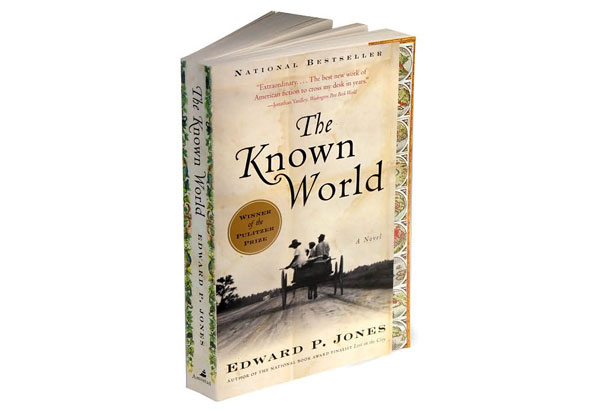
Pulitzer Prize winning genius Edward P Jones hit the ball out of the park with his debut novel.  Vivid, descriptive, and captivating, The Known World deserves a standing ovation. Few authors effectively utilize “stream of consciousness” but Jones makes this technique appear effortless, adding difficulty by combining narratives from the past present and future.

But don’t take my word for it (in Levar Burton voice), below is an excerpt:

“His oldest child from his second marriage, Matthew, stayed up all the night before he was buried, putting his father’s history on a wooden tombstone. He began with his father’s name on the first line, and on the next, he put the years ofhis father’s coming and going. Then all the things he knew his father had been. Husband. Father. Farmer. Grandfather. Patroller. Tobacco Man. Tree Maker. The letters ofthe words got smaller and smaller as the boy, not quite twelve, neared the bottom ofthe wood because he had never made a headstone for anyone before so he had not compensated for all that he would have to put on it. The boy filled up the whole piece ofwood and at the end of the last line he put a period. His father’s grave would remain, but the wooden marker would not last out the year. The boy knew better than to put a period at the end ofsuch a sentence. Something that was not even a true and proper sentence, with subject aplenty, but no verb to pull it all together. A sentence, Matthew’s teacher back in Virginia had tried to drum into his thick Kinsey head, could live without a subject, but it could not live without a verb.”

1 Comment

Filed under Afro-American Lit, What We're Reading